
FEFO Consulting

10 Myths of Safety Leadership Development

What the research says and why it matters for your organisation. Myths on Closing the Knowing-Doing Gap Myth 1: Training is development The Reality: Training is an event. Development is a process. Single-event training produces short-term knowledge gains that decay rapidly without reinforcement. FEFO helps organisations discover-design-embed learning and development practices. We do this by […]

What the research says and why it matters for your organisation.

Myths on Closing the Knowing-Doing Gap

Myth 1: Training is development

The Reality: Training is an event. Development is a process. Single-event training produces short-term knowledge gains that decay rapidly without reinforcement.

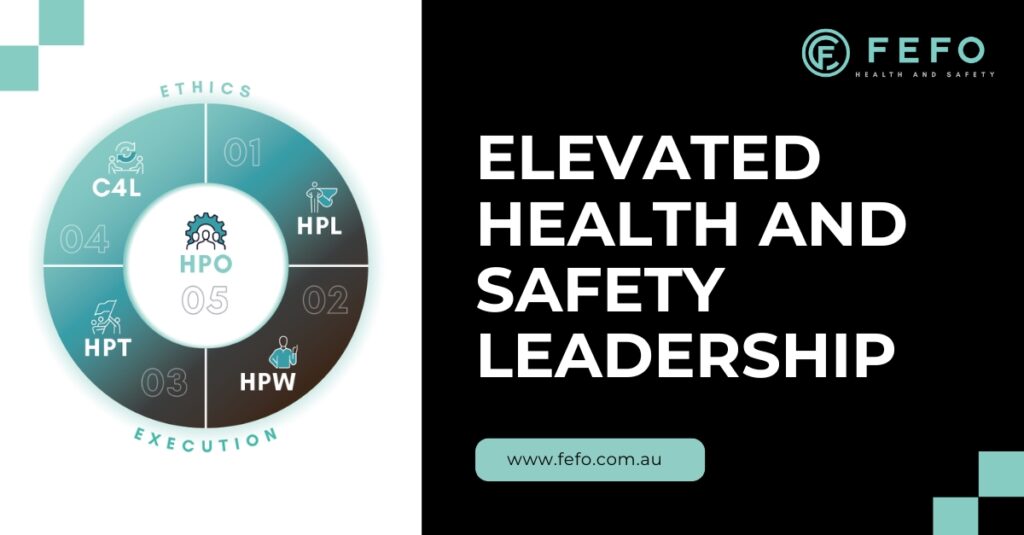
FEFO helps organisations discover-design-embed learning and development practices. We do this by enabling reflection, reinforcement and application.

Research:  Pfeffer & Sutton (2000); Kolb (1984); Mezirow (1991)

Myth 2: If they know better, they’ll do better

The Reality: The knowing-doing gap is not a knowledge problem, it is often related to motivation, identification, habit or environment. More information alone does not close it.

FEFO help close the gap by enabling effective learning.

Research:  Kennedy et al. (2004); Pfeffer & Sutton (2000)

Myth 3: Leadership capability is fixed — you either have it or you don’t

The Reality: Leadership is a set of learned behaviours, not a personality trait. Fixed mindset thinking about leadership is itself a barrier to change.

Our Elevated Safety Leadership program is designed to overcome fixed mindsets and enable high performance.

Research:  Dweck (2006); Boyatzis & McKee (2005)

Myth 4: One programme fixes it — and completion means it worked

The Reality: Sustained change requires sustained conditions, not a single intervention. Behaviour change is a continuous process, not a destination.

Equally, completion is not transformation. Attendance and quiz scores measure exposure, not change. Behavioural commitments with feedback loops – not certificates, are the real indicators of development.

Our Elevated Safety Leadership program goes beyond the individuals to include systemic human and organisational factors to enable high performance.

Research:  Clear (2018); Zimmerman (2000); Locke & Latham (1991)

Myth 5: Technical safety expertise makes a good safety leader

The Reality: The competencies that produce technical excellence in safety are distinct from, and sometimes in tension with those that make an effective safety leader.

Research:  Sutcliffe (2011); Boyatzis & McKee (2005)

Myths Preventing the Right Safety Leadership Program Design

Myth 6: eLearning is an efficient way to develop safety leadership capability

The Reality: eLearning transfers knowledge and tests compliance efficiently. It does not replicate the social interaction, real-time feedback, psychological safety, and contextual practice that leadership behaviour change actually requires.

Research:  COMPASS Model (2024); Specht & Sandlin (1991); Kolb (1984)

Myth 7: Engagement and wellbeing are soft — safety is hard

The Reality: Leaders operating in sustained dissonance – stress, burnout, emotional disconnection – create measurable risk in the people around them.

In safety-critical environments, this is not a culture issue. It is a risk exposure.

Research:  Boyatzis & McKee (2005); Sutcliffe (2011)

Myth 8: Self-directed learning means unstructured learning

The Reality: Self-direction is not the absence of structure; it is the presence of internal ownership within a well-designed framework. Structure and autonomy are not opposites.

Research:  Garrison (1997); Zimmerman (2000)

Myth 9: Programme design should focus on what to learn, not how people learn

The Reality: Two programmes covering identical content can produce radically different outcomes depending entirely on how that content is engaged with.

A ‘what’ focus informs leaders.
A ‘how’ focus changes them.

Research:  Kolb (1984); Mezirow (1991); Specht & Sandlin (1991)

Myth 10: Aggregating self-assessments tells us how our safety leaders are performing

The Reality: Self-assessment is perception, not measurement. Aggregating individual self-reports produces a portrait of collective self-perception and not a valid measure of actual safety leadership behaviour across the organisation.

Research:  Zimmerman (2000); Locke & Latham (1991); Dunning-Kruger (1999)

Download our Key Steps to High Performance Organisations (HPO)

Share this post

What we do

We help organisations simplify critical aspects of health and safety by strengthening controls and enabling high performance.