
FEFO Consulting

Federal Safety Commissioner (FSC)

For many organisations, obtaining independent third-party accreditations enable business improvements, organisation credibility, pre-qualifications to access new markets and provides independent assurance. The decision to gain third-party accreditations should align with your strategic plans and aim for an effective Return on Investment (ROI).   

The FSC Scheme

The Office of the Federal Safety Commissioner (OFSC) have been administering a scheme for over 15 years. Building work funded by the Australian Government over certain financial thresholds must be contracted to a Scheme-accredited head contractor. 

In a recent article published by the FSC: 

“Over 530 companies currently accredited under the Scheme have contributed to achieving this milestone. These companies report significant safety and financial benefits from Scheme accreditation: 

It remains unclear how valid these measures are, given most construction companies who are FSC accredited are larger vs smaller companies who are often less mature. There are also many other variables besides FSC accreditation, that could impact health and safety performance. Regardless, having a reliable and valid measure of health and safety performance is a topic for another day! 

Systems vs Culture?

balance Icon 3444757

To quote Peter Drucker,  

“Culture eats strategy for breakfast!”


The decision on allocating extra resources to improve systems vs culture is often a challenge. One option is to establish foundational systems before investing in culture improvements. An alternative approach would be not to view systems and culture as a linear transition, but more as two key components to any health and safety strategy that should be improved in parallel, regardless of your organisation’s maturity.   

FSC vs ISO 45001 Requirements?

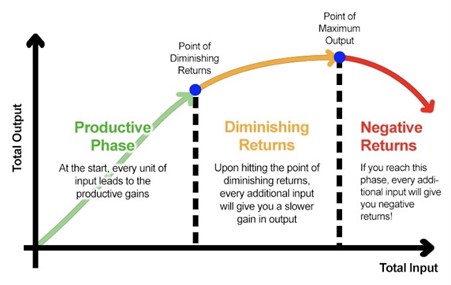
It is important to understand your unique point of diminishing return as organisations evaluate the trade-off with adopting third party accreditation systems, e.g. over-investing in systems vs culture, or making other resourcing decisions.

For certain organisations, adopting the very high levels of FSC requirements could be considered Over the Top (OTT!). For others, investing heavily in building a high-performance culture in parallel with obtaining accreditations, could be considered a better ROI.   

Regardless of your situation, establishing a fit for purpose strategy and relevant goals are important.   


So, what to do?

A few areas to consider:  

Additional Resources 

FEFO Consulting offer free preliminary assessments to organisations considering FSC accreditation. Contact us today to discuss. 

To understand more about FSC accreditation, refer to our Case Study and 5 Steps to FSC Accreditation Guide.  

For those more interested in investing in culture, refer to our Case Study on Building an Effective Safety Culture.   


Subscribe: Get updates from FEFO

Designing scalable systems

When helping clients with management systems, we often get asked: 

  1. What are the benefits of an Integrated Management System (IMS)?    
  1. What does an IMS look like? 

Your objectives

It is important to understand your organisational context, and requirements when considering the adoption of an IMS. For many organisations, certification against ISO 45001 health and safety, ISO 14001 environmental and ISO 9001 quality (HSEQ) is often a goal. For others, certification is less relevant and integrating multiple business systems and processes is a greater priority.  

IMS Design

Your organisation’s context and requirements should consider internal / external stakeholder needs and expectations, internal and external issues, as well as legal and other requirements. The scope of your management system should align with these requirements and objectives. Regardless of the scope, adopting the ISO management system principles of Plan-Do-Check-Review, often allows flexibility for the content to scale and change, while keeping the same overall structure.   

The Level of Integration

Integrating different components of an IMS can have huge organisational benefits. There are a few considerations when deliberating between centralised vs decentralised levels of integration.  

Business Function Processes

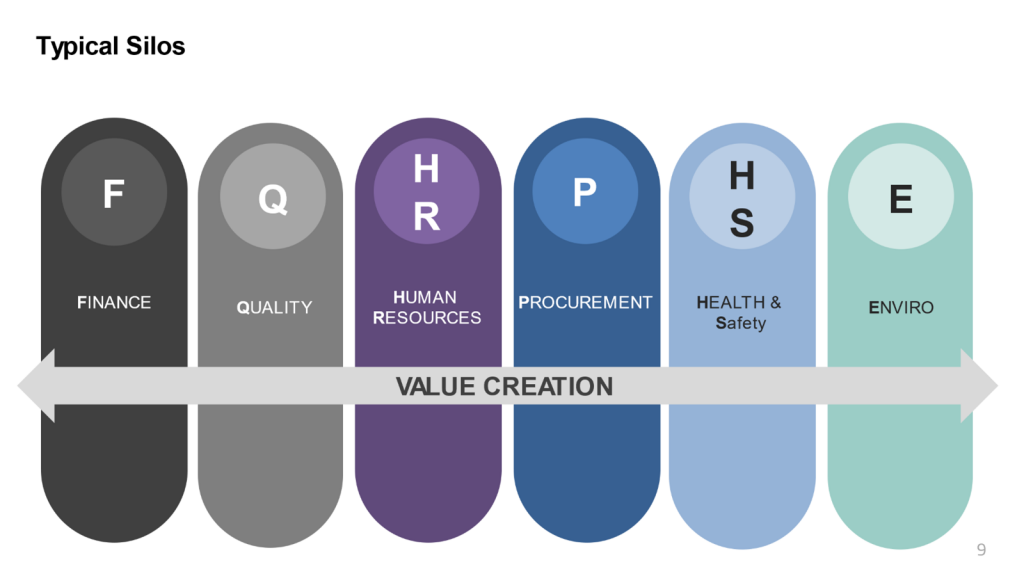
Based on the management system scope, integrating processes for business functions can create efficiencies, scalability, and value creation e.g.,  

Aligning the level of management system integration with organisation design and structure is often a good guide, .e.g., cultures that are highly collaborative, simple businesses, with centralised shared service functions, often benefit from a highly centralised IMS. Whereas large, highly complex and diverse organisations may benefit from a more decentralised management system/s.   

“Knowledge is a process of piling up facts; wisdom lies in their simplification.”

Martin H Fischer

Document Hierarchy & Mapping

One vs. multiple documents covering the same subject area, is also a key consideration. The decision on the volume of documents is often influenced by the end-user needs, nature, and maturity of the business, e.g.,  

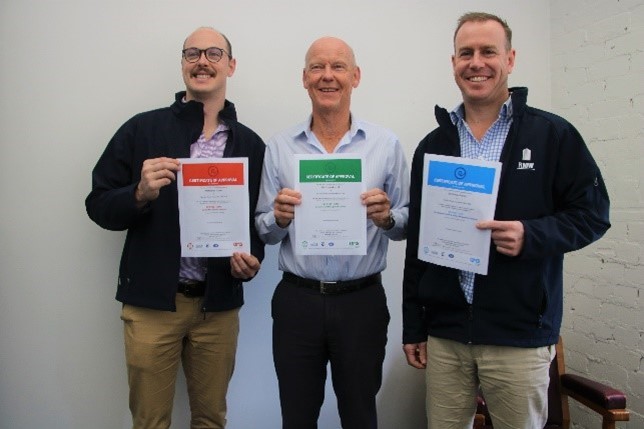
RM Watson IMS Triple Certification

So What to do?

A few ideas and options to help: 

Additional Resources

FEFO Consulting offer free assessments to organisations considering management system improvements contact us

If you are interested in construction Federal Safety Commissioner accreditation, refer to our Case Study on achieving OFSC Accreditation and 5 Steps to FSC Accreditation Guide. 

For those more interested in investing more in culture vs systems, refer to our Case Study on Building an Effective Safety Culture.   

Subscribe: Get updates from FEFO

What’s the difference?

The world’s first International Standard to address workplace psychosocial health was published in June 2021.  ISO 45003 Occupational health and safety management – Psychological health and safety at work  – gives guidance on managing psychological health and safety risks to align with ISO 45001 occupational health and safety management system. It addresses the many areas that can impact a worker’s psychological health, including ineffective communication, excessive pressure, leadership, and organizational culture.

What’s the same with ISO 45001 and ISO 45003?

Both standards ISO 45001 and ISO 45003:

A clear distinction is ISO 45001, has great emphasis on both workplace health AND safety (WHS). To understand how to measure WHS refer to the Health and Safety Index article, “An integrated approach for Health AND Safety”.

What is different about ISO 45003?

ISO 45003 provides more specific psychosocial risk guidance on how to identify:

So, what to do?

Given work-related hazards of psychosocial nature are often invisible, we recommend:

FEFO Consulting has partnered with the Health and Safety Index to design integrated online assessments to measure health AND safety performance supported by reliable benchmarks.

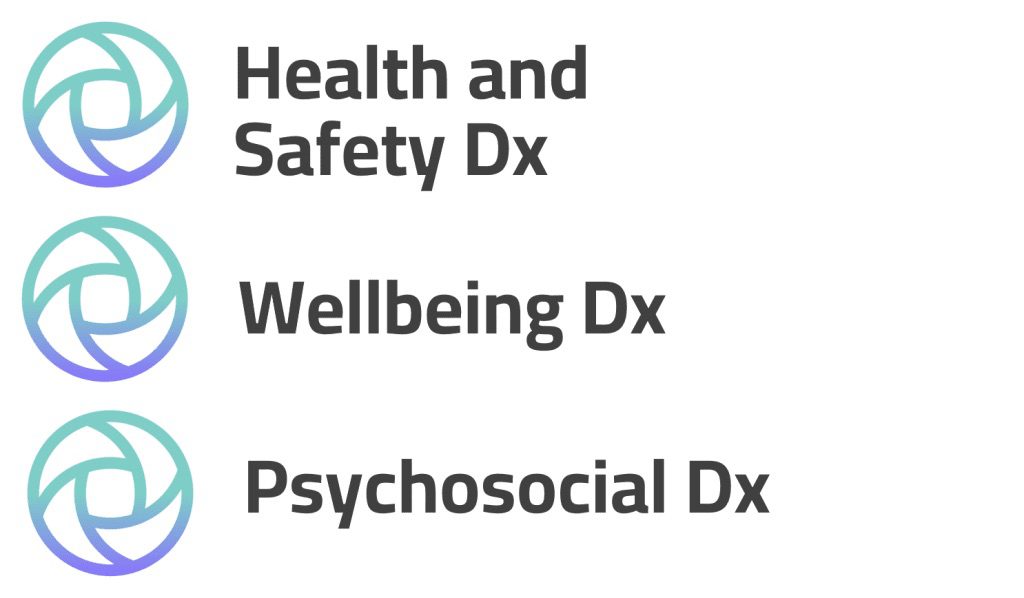
We appreciate organisations have different needs, so have developed a range of Diagnostic (Dx) surveys along a spectrum of being broad to more specific.

Diagnostic (Dx) Options


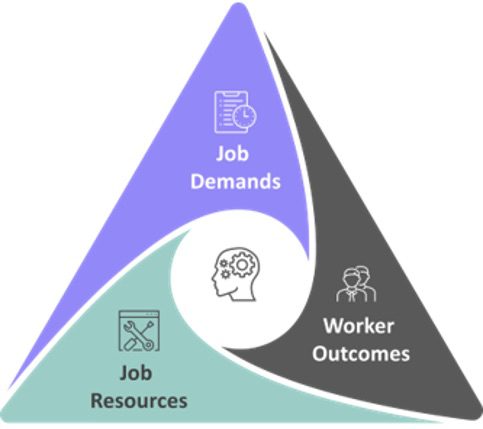
Check out our short Mental Health & Wellbeing Organisation Assessment video covering 17 psychosocial factors is designed to align with a Job Demand-Job Resource-Worker Outcome Model with a particular focus on mental health.

To understand more about our deep dive organisation assessment services into Mental Health & Wellbeing, refer to our Case Study or contact us at info@fefo.com.au 

Subscribe: Get updates from FEFO

The Office of the Federal Safety Commissioner (OFSC) recently awarded one of our clients Baseline Projects their accreditation to bid for commonwealth construction work greater than $4 million.

The journey of helping a client through OFSC accreditation is tough! It is well recognised achieving OFSC accreditation is much harder than ISO45001 and similar industry certifications.

Despite the hard slog, it was incredibly rewarding seeing our client Baseline succeed. When I tell this story, the first response I get is often “…who is Baseline Projects?”. Both Aaron Meharg and Dave Vella are two young Directors of Baseline with bright futures. Their personal leadership to own, develop and execute health & safety on their construction sites was amazing!

Approx 6 months prior to achieving OFSC accreditation, Aaron, the Managing Director of Baseline Projects approached FEFO Consulting hoping to gain accreditation to bid for commonwealth funded construction work. I agreed to help Aaron with hesitation, knowing how difficult the OFSC requirements are to both develop and implement. We started with a blank sheet of paper and a few months later – boom! success 🙂

This success will not only help Baseline workers safety, this is also a huge financial boost for such a young company. Once Baseline obtained their safety accreditation, they were almost immediately awarded a multimillion-dollar contract with the Australian Defence Force.

FEFO Consulting learnt plenty along the way helping Baseline. For more information refer to our Success Stories for a free guide on how to achieve OFSC accreditation.

What we do

We help organisations simplify critical aspects of health and safety by strengthening controls and enabling high performance.