FEFO Consulting has partnered with Australian Institute of Health & Safety to deliver a webinar on Elevated Safety Leadership That Sticks – Discover. Design. Embed.
Go beyond teaching, and help your leaders “how” to learn.
In this clip, Ventia highlights their partnership with FEFO Consulting in delivering the Safe for Life module of the Elevate program for frontline leaders.
Built on the LEAD framework – Learning, Engaging, Accountability and Discipline – the program equips leaders with practical strategies for proactive risk management and has been recognised with industry awards in 2024.
Sign up for industry leading news, case studies and informative videos…
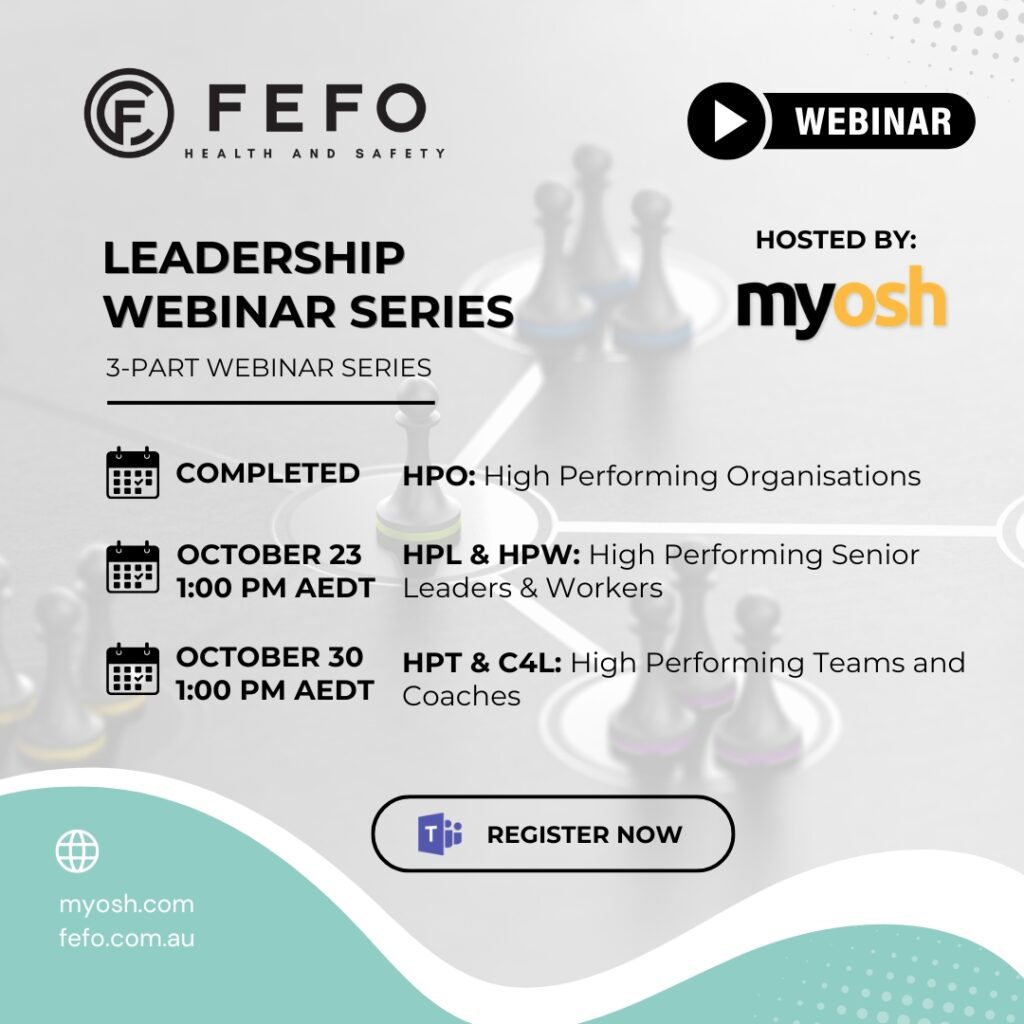
3-Part Webinar Series
This year, we hosted a series of webinars in partnership with myosh, designed to equip leaders and teams with the tools to drive safety, wellbeing, and effective leadership.
Thank you to our speakers, partners, and participants for making 2025 a year of growth and impact.
As we close out the year, we’d like to extend our sincere appreciation to everyone who joined The Safety Connect events across the country.
Throughout the year, we connected leaders, practitioners, and safety professionals to exchange insights, build relationships, and inspire meaningful discussions across our industry.
We’re excited to continue building these connections and creating more opportunities for learning and collaboration in 2026 — see our Events calendar here.
We wish you a wonderful holiday season and a safe, refreshing start to the new year.
Connect with us
For updates, share learning and insights in 2026, follow us on LinkedIn and our YouTube Channel
Do you know someone who could benefit from subscribing to our emails or connecting with us via LinkedIn?
We’d love you to forward this email to a friend or colleague and follow us on LinkedIn.
Sign up for industry leading news, case studies and informative videos…
Webinar Series
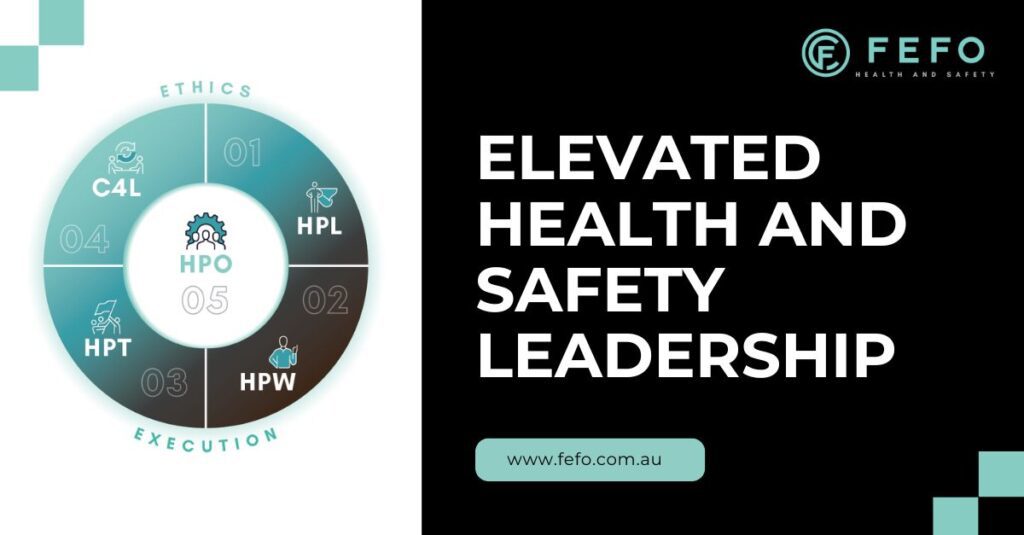
Elevated Health and Safety Leadership
Often organisational health and safety culture is based on rules, without agility and autonomy, where psychological health is treated separately from physical safety and organisations blissfully unaware
Effective leaders are mindful, present, lead with purpose and enable high-performance. High organisational performance is supported by integrated solutions, with measurable and sustainable outcomes.
Join our 3-part webinar series designed to elevate leadership across all levels of your organisation. Learn to lead with intention, build trust, foster engagement, and drive high performance.
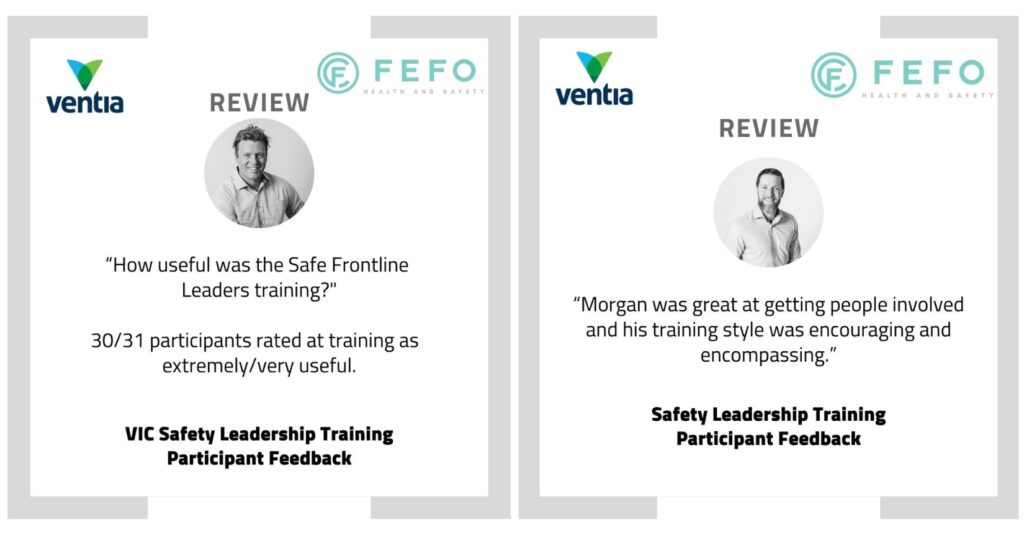
Since 2023, FEFO Consulting has delivered over 130 leadership training sessions with Ventia, supporting their ongoing commitment to strengthening safety leadership and culture across their teams.
Feedback from participants has been extremely positive, with many noting that the sessions were engaging, relevant, and directly applicable to their roles.
This collaboration continues to demonstrate how consistent leadership development can drive safer, more connected, and more confident workplaces.
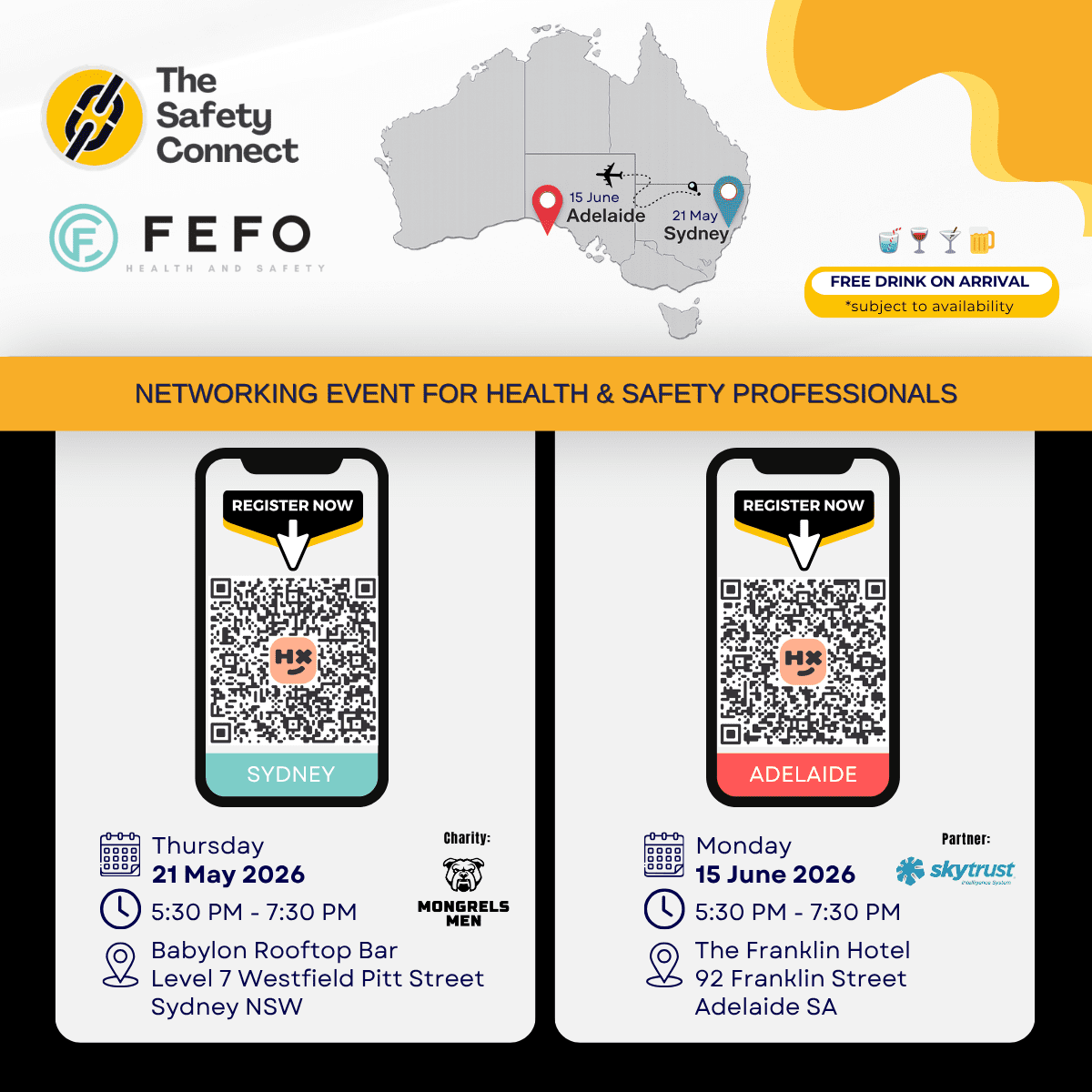
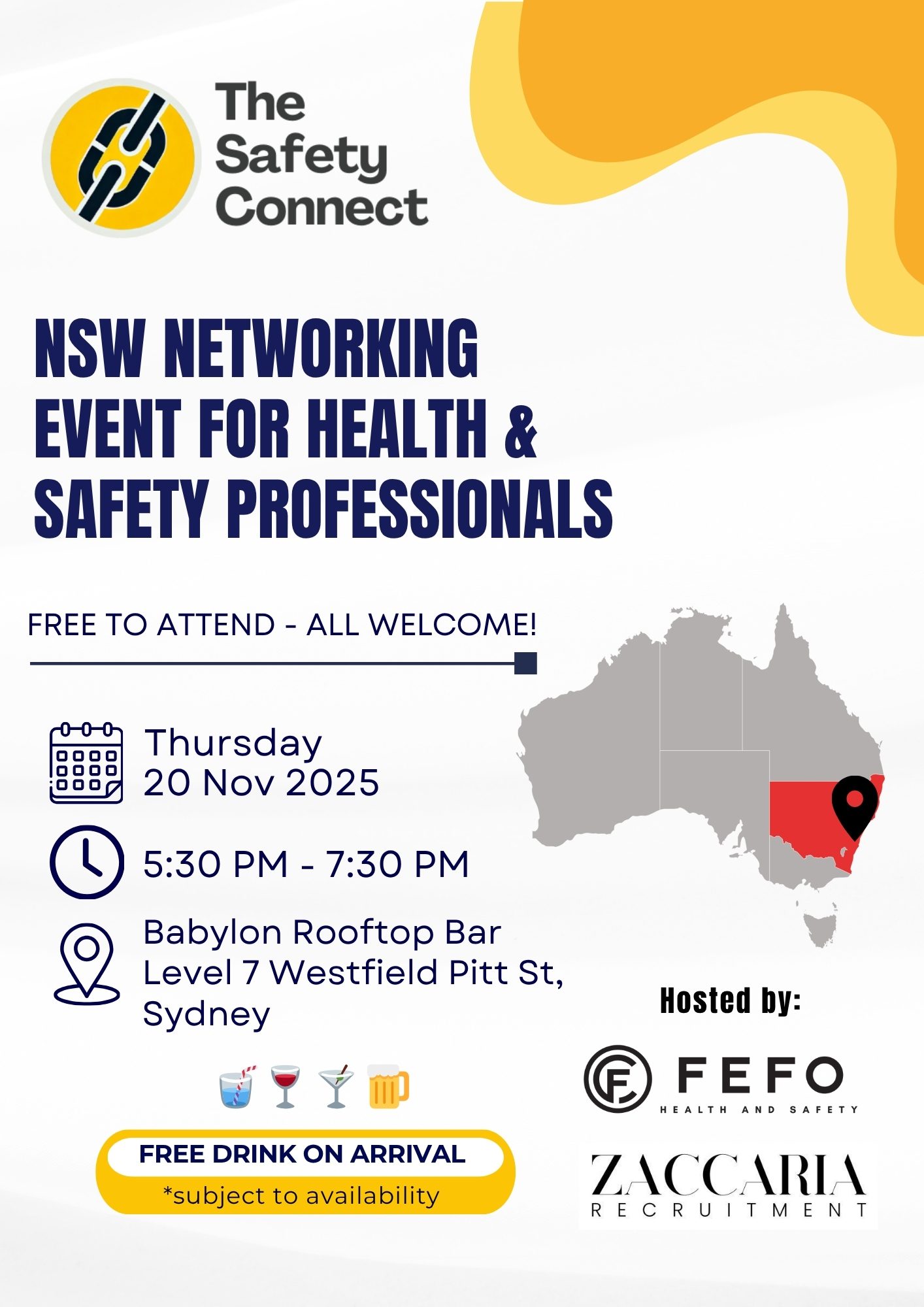
Join us for The Safety Connect’s final networking event of 2025! It’s a great chance to connect with health and safety professionals, share ideas, and be part of an engaging discussion that supports safer workplaces.
With the holidays just around the corner, it’s the perfect time to catch up with peers and celebrate the power of connection and collaboration in our industry.
📅 Thursday, 20 November 2025 🕔 Time: 5:30 pm – 7:30 pm 📍 Location: Babylon Rooftop Bar, Level 7 Westfield Pitt Street, Sydney
Sign up for industry leading news, case studies and informative videos…
In this month’s eDM, you will find:
How to Build Capability Using WHS Performance Assessments
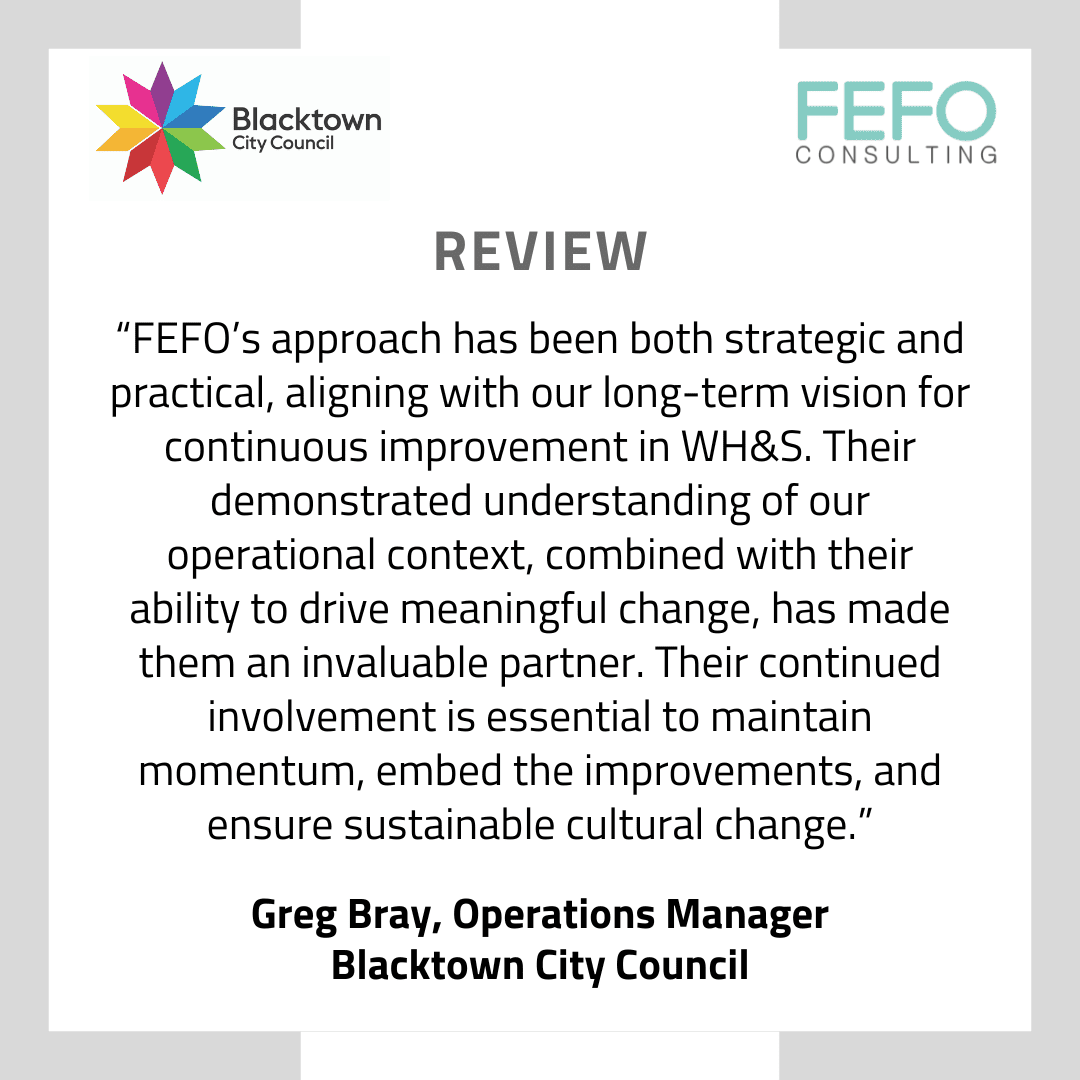
Client Feedback on WHS Improvement
Critical Risk Webinar Series
Strategy Day
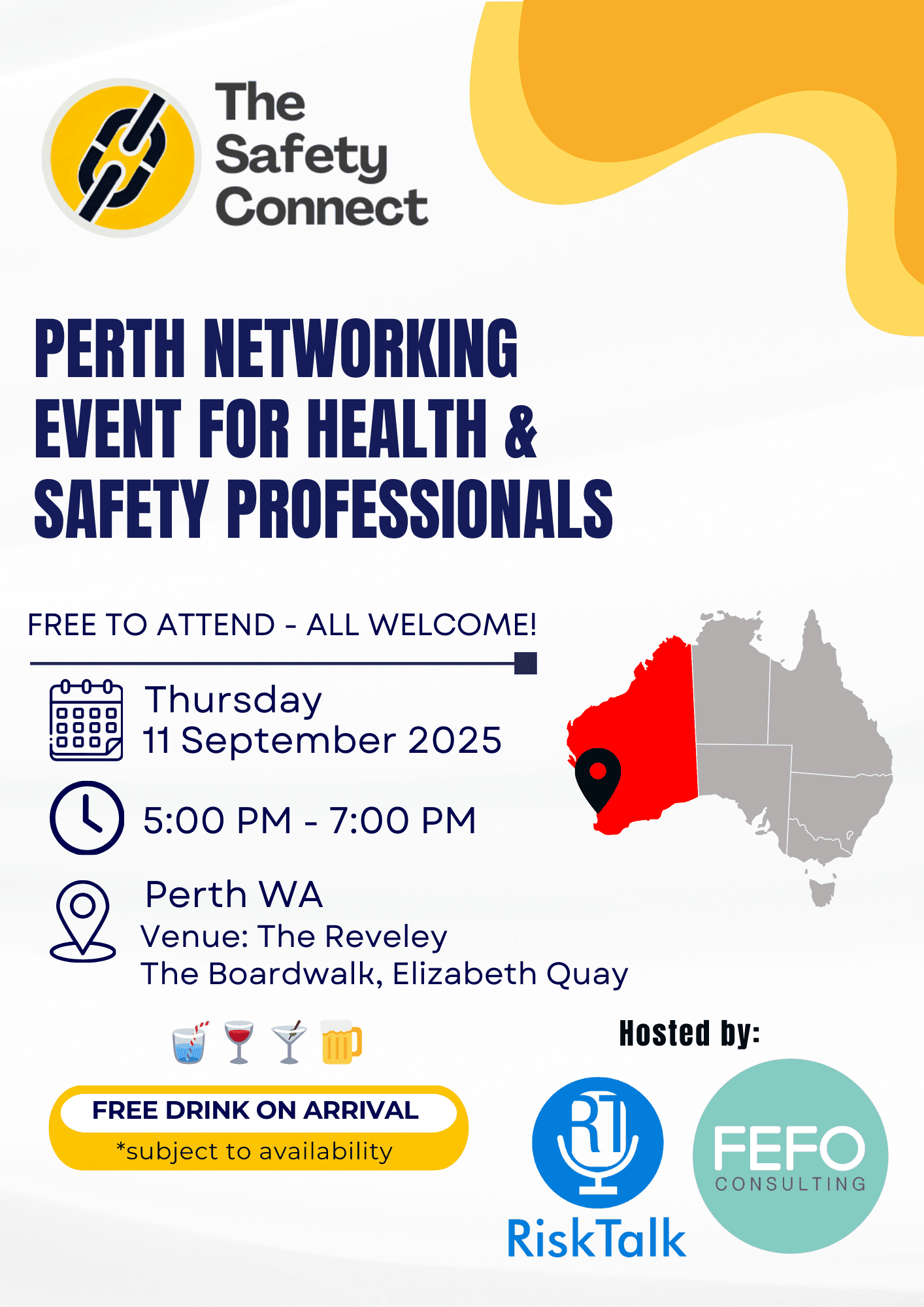
The Safety Connect in Perth
Webinar Series
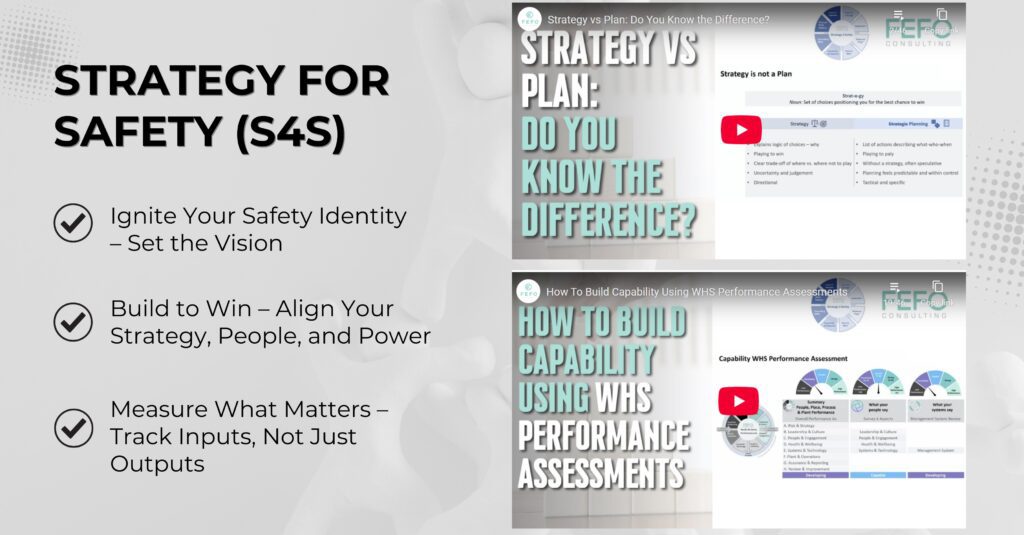
Strategy for Safety – Building Capability
In our Strategy for Safety webinar series, we discussed the strategic use of lead indicators by combining a statistical reliable survey with other inputs to track health and safety performance over time.
Visit our blog for additional resources, including a health and safety strategy checklist.
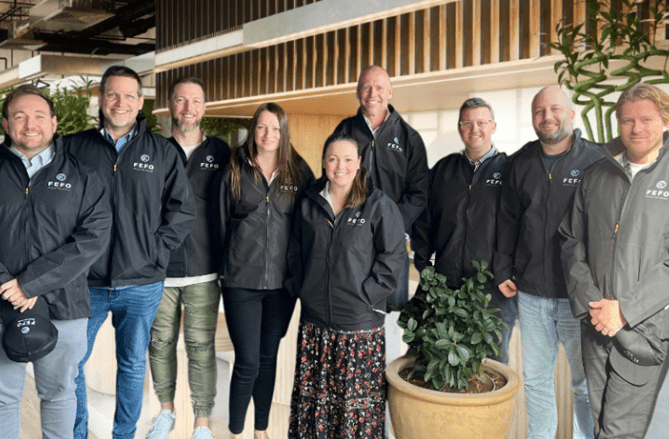
Last month, our team came together for a strategy day filled with open conversations, fresh ideas, and plenty of collaboration. It was inspiring to see everyone tackle challenges head-on, share honest feedback, and work together on practical solutions that will shape our way forward.
As part of this, we also applied our own approach by completing the Psychosocial Dx survey. The results placed us in the Developing category (overall score of 68), showing we have a strong foundation but also key opportunities to improve.
Follow us on LinkedIn or subscribe to our newsletter to stay updated and be among the first to see the results!
Want to Connect with Like-Minded People?
Join The Safety Connect
After an incredible event last May, we’re returning to bring the community together once again.
Join The Safety Connect community for an evening of meaningful conversations, stronger connections, and a supportive peer network. 🤝
📅 Date: Thursday, 11 September 2025 🕔 Time: 5:00 – 7:00 PM 📍 Location: The Reveley | The Boardwalk, Elizabeth Quay, Perth WA
This event supports PBF Australia (The Paraplegic Benefit Fund), a national not-for-profit organisation dedicated to creating awareness and reducing the impact and incidence of spinal cord injury.
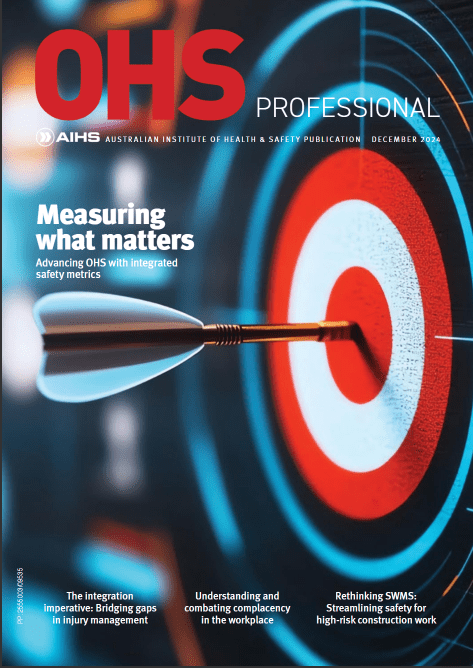
The December edition of the Australian Institute of Safety (AIHS) magazine included a cover story titled “Measuring What Matters” featuring FEFO Consulting and case studies from two of their client BSA Ltd and Journey Beyond.
1. How well do most organisations fare in general when it comes to effective metrics/measurement for OHS?
The topic of workplace health & safety performance measurement has been a longstanding debate for decades, which suggests many organisations are still struggling to apply effective OHS metrics/measurement.
When applied well, OHS metrics/measurement should support effective decision making, promote desired behaviours, create optimal workplace conditions and ultimately assist with improvement. If applied ineffectively, reporting on OHS metrics/measurement can be an administrative burden that adds little value. So why not start with understanding was does add value?
OHS performance measurement should align with a clear set of strategic objectives to create value and enable high performance.
Download our Safety for Strategy (S4S) brochure.
2. Where are the most common challenges/issues for them in this regard?
When discussing this topic, it is important to differentiate between metrics (numbers) and performance (relative progress). Too often organisations overdose on metrics and rely solely on numbers as the only way to measure performance. Although quantitative performance metrics are important, it’s not the only way and often not the first place to start.
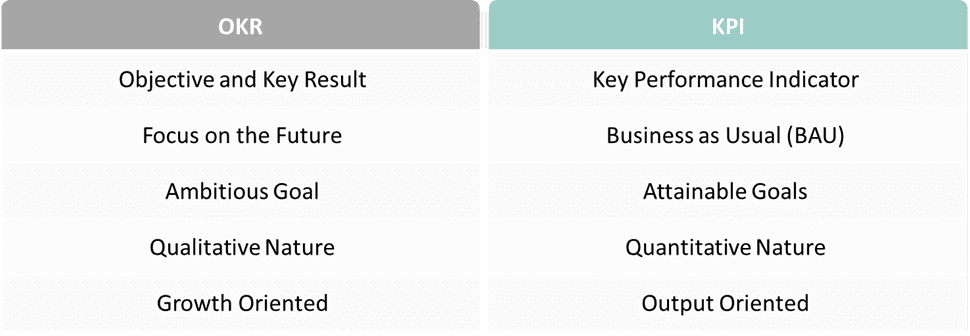
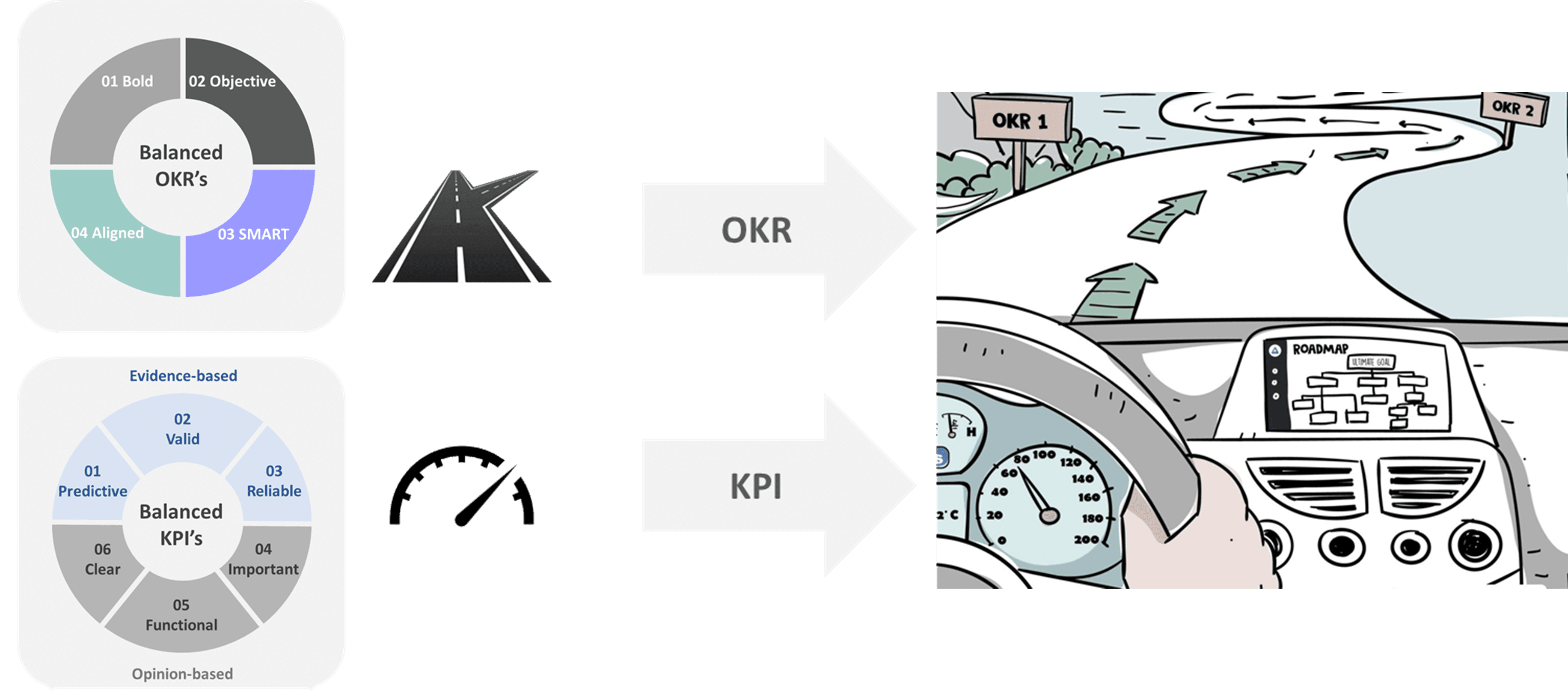
Metrics can be used in conjunction with other qualitative methods to engage workers, measure relative progress (performance), learn and improve from workplace experiences. Organisations that are more mature apply both Objectives and Key Results (OKR) and Key Performance Indicators (KPI) in a complimentary way.
The most common challenge with performance measurement is verifying how it adds value. Common issues include:
Challenge #1 Output vs Input
Focusing on the goal/KPI first (outputs), rather than the systems, conditions, practices or behaviours (inputs) that impact performance, e.g. both the winning and losing football coaches have the same goal/KPI to win. The goal is not the differentiator, it’s often the systems, conditions, practices and behaviours that positively influence the desired habits to achieve objectives and differentiate winners from losers.
Similarly, setting a goal of Zero Harm might be considered inspirational, but also will not on its own provide a winning ingredient for safety success. In some circumstances setting the goal of zero harm can lead to unintended consequences, e.g. underreporting and not sharing lessons learned.
Challenge #2 Short vs Long-term
Distraction by the goal/KPI dashboard rather than the destination of where you/your organisation are headed. Changes in metrics are often momentary and could be a distraction from learning about underlying systemic contributing factors. Similarly, blaming the worker, team behaviours or symptoms, rather than learning and addressing the cause.
Challenge #3 Balance
Not applying a balanced scorecard based on the strategy, e.g. balancing the right lead vs lag, and compliance vs performance measures. Adapting the balanced scorecard and being open to change is critical to align with changes to the strategy.
Challenge #4 Reliability
Not using statistically reliable and valid climate surveys with credible benchmarks. Seeking feedback at scale is a great way to understand relative progress. Survey benchmarks lose their value unless statistically reliable and valid. For more information refer to “Why is Survey Reliability and Validity Important?”
Challenge #5 Quantity vs Quality
Counting the volume (Quantity) of activities, e.g. number inspections or toolbox talks completed, rather than effectiveness (Quality), e.g. critical control effectiveness. Criticality is important to ensure a focus on what is important.
Challenge #6 Injury Classification vs Potential Consequence
Using injury classifications (Lost time, medical treatment, first aid injury) as an indicator of performance is often a mask of the potential consequence. Often the classification of an injury is luck, and can mask the real potential consequence, e.g. there can be no injury, but a near miss activity working at height or contact with electricity could potentially have fatal consequences.
Case Studies
Journey Beyond
Journey Beyond also launched a safety culture survey through FEFO Consulting to its geographically diverse employee base, and delivered a WHS maturity assessment, including a macro level review of safety systems and interviews with key operational leaders.
“The overall recommendations of this approach have informed the development of operational action plans for each business unit, using their safety culture levers for improvement, as well as strategic recommendations that have informed our new group-wide HSE strategy 2024-2027,” said Kidman.
This approach has enabled a clear roadmap to be developed that is easily monitored, adjusted, and scaled for growth. Aligning our strategic activities to KRAs and measuring the success of those outcomes using OKRs will also allow us to more easily remeasure our safety culture in the future.” – Nicole Kidman, General Manager
BSA Limited
“For example, one of our strategic objectives is to better engage, communicate, and consult with our workforce so we foster empowerment, fairness, and trust (under our engagement strategic pillar). We then measure our success as it relates to this objective through our health and safety index survey score annually, which has an overall target. Each strategic initiative or program we have is designed and linked to ensure we are influencing our objective because we understand that is the ultimate goal, rather than the KPI or target.” – Kynan Ford, Group Head of HSEQ, Compliance and Sustainability
3. How can OKRs (for example) help address these challenges/issues? Examples?
If Objectives and Key Results (OKR) are based on an effective strategy, by default you are tracking activities that are important, i.e. strategic choices that are aimed to have a positive impact and add value.
For example, a strategic choice might be to invest in traffic control equipment in NSW and QLD due to the unique risk profile. Rather than tracking traffic incident data or the number of traffic control inspections, why not create a set of robust organisational OKR’s that cascade into the respective regions with local ownership that are tracked and updated quarterly. Engage owners to review OKR progress by sharing lessons learnt, evaluate effectiveness of critical controls and report on the financial return on investment.
Objective: Improve forklift warehouse safety performance in QLD and NSW
Key Results:
100% forklifts fitted with sensors by Q1 FY25
25% improvement in critical control effectiveness by Q4 FY25
100% of lessons learned from reviews shared across the organisation quarterly.
KPI: Costs to fix damaged forklifts resulting from incidents.
4. What advice would you offer OHS professionals who might be considering a change in their approach?
Start with a set of clear strategic objectives that are selected to add value. This begins with aligning a health and safety strategy with the direction of the business. Remember, a strategy is not plan with a list of actions. A strategy is a set of conscious choices with known trade-offs and effective methods to monitor progress. If the above-mentioned strategic choices are ineffective, there is risk organisations are measuring the wrong things. This often adds little value and prevents optimal outcomes. Therefore, spend time to get the strategic choices right.
Regardless of an organisations maturity applying OKRs and KPIs can be applied in a pragmatic and engaging way that are aligned to strategic objectives. OKRs should also be bold, relatively flexible and verifiable. Avoid the “set and forget” trap by engaging OKR owners and evaluate progress on a quarterly basis. KPIs can be used as an indicator in a balanced way, e.g. bias attention on OKRs rather than KPIs to focus resource on what matters most to create achieve objectives.
“Approx. 10% of businesses effectively engage their frontline operations on quarterly basis to track health & safety OKR performance.” – Mark Wright
5. How can they best go about the process?
A robust process for an effective health and safety strategy should inform an aspiration, where to play, how to win, resources needed and methods to measure performance. Engage a range of stakeholders on creating strategic objectives, a balanced scorecard and innovative was to track progress.
For more information refer to the following article and free resources:
Safety culture in the workplace is not just about compliance; it’s a strategic asset that can significantly impact an organisation’s safety performance and, ultimately, its financial performance 1. A recent longitudinal study has shed light on this interconnection, providing valuable insights for businesses aiming to enhance their safety protocols and financial outcomes.
Overview
The study, conducted over a span of 14 years (2005-2019), analysed data from European companies across various sectors. It aimed to understand the impact of a robust safety culture on safety performance and how this, in turn, affects financial performance.
The findings were clear: companies that invested in comprehensive safety policies, employee training, and safety management systems not only saw improvements in safety metrics but also enjoyed better financial results 2 which is also in line with previous research.345
Safety Culture as a Financial Lever
The research highlighted that safety culture goes beyond mere accident prevention. It encompasses a proactive approach to managing employee relationships in a safe and socially responsible manner. This approach helps in mitigating workplace risks and protecting the company from reputational damage.
A Comprehensive Approach to Safety Culture
The study advocates for a holistic approach to safety culture, considering technological, organisational, and human factors as interrelated elements. Cultivating a culture of safety requires efforts at both individual and organisational levels, integrating safety into various aspects of operations (Bautista-Bernal et al., 2024). For contractor safety, implementing a health and safety policy within the key aspects of the supply chain was deemed most influential.
Organisations with a positive safety culture are characterised by a collective attitude based on collective commitment, risk awareness, collective learning and trust in prevention. These organisations are distinguished by communication based on mutual trust, a shared perception of the importance of safety and confidence in the effectiveness of preventive measures.6
Strategic Implications for Organisations
Organisations are encouraged to prioritise a culture of safety as part of their strategic objectives. The study suggests an incentive-based approach to persuade firms to adopt OHS systems, maintain an employee health and safety team, and develop preventive initiatives to improve safety conditions in the supply chain (Bautista-Bernal et al., 2024), e.g. rather than focusing on injury classification or the absence of harm, recognise what goes right in the presence of effective controls.
So Where to Start?
There are endless options related to prioritising systems, effective teams, and preventive initiatives to improve safety conditions in the supply chain. Why not ask your employee?
FEFO Consulting often utilise the suit of Health and Safety Index Diagnostic (Dx) tools to seek feedback and prioritise strategic objectives. For those organisations not ready for a staff survey, speak to us about our range of Assessment (Ax) tools that can also be applied in an efficient way to support safety culture improvements.
Our targeted approach enables us to partner with organisations to develop strategic Objectives and Key Results (OKR), and tailored deployments that cascade throughout the organisations to add value and support improvements.
Conclusion
This study underscores the importance of safety culture in enhancing safety performance and driving financial success. It provides a compelling case for organisations to invest in safety, not just as a compliance requirement, but as a strategic move that can yield significant financial rewards.
Hajmohammad & Vachon, S. &. (2014). Safety Culture: A Catalyst for Sustainable Development. Journal of Business Ethics. ↩︎
Bautista-Bernal et al., I. (2024). Safety culture, safety performance and financial performance. A longitudinal study. Safety Science. ↩︎
Feng et al., Y. (2014). Exploring the interactive effects of safety investments, safety culture and project hazard on safety performance: An empirical analysis. International Journal of Project Management. ↩︎
Kalteh et al., H. O. (2019). The relationship between safety culture and safety climate and safety performance: a systematic review. International Journal of Occupational Safety and Ergonomics. ↩︎
Kundu et al., S. (2016). Effects of Safety Climate, Safety Attitude, and Safety Performance on Firm Performance: A Study of an Automobile Firm. International Journal of Biometrics↩︎
Gadd & Collins. (2002). HSL/2002/25-Safety Culture: A review of the literature. Semantic Scholar. ↩︎
Did you know?
On average, plant & equipment account for 71% of mechanisms related to worker fatalities1. Under WHS legislation, the principal duty of employers is to provide information, instruction, training, and supervision to employees.
Are your plant & equipment critical controls effective?
Can your organisation actually verify effectiveness?
Recently, Safe Work Australia published a new Code of Practice (COP) on Managing the risks of plant in the workplace, released in December 2023.
Code of Practice (CoP) Amendments:
Section 4.6 Roll-ways
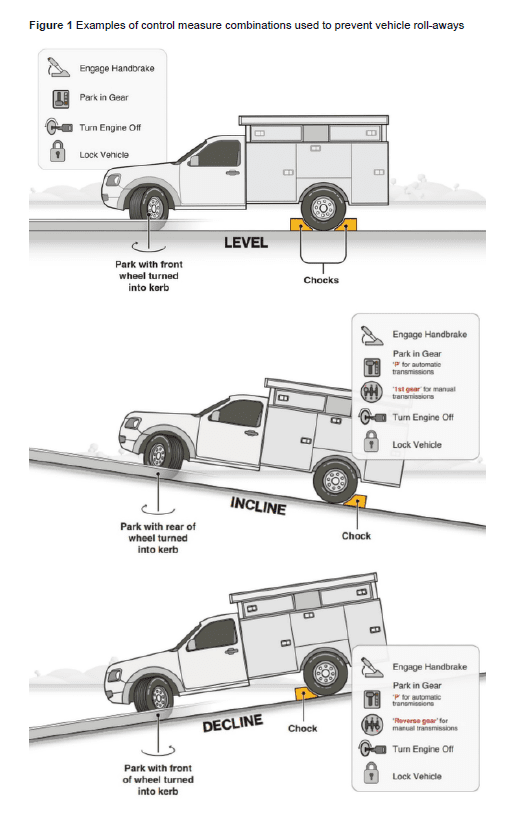
Vehicle roll-aways refer to the unintentional movement of a vehicle that has not been properly immobilised. This has been a major cause of work-related fatalities and injuries in Australia.
Sets the guidelines for preventing Vehicle roll aways on flat or sloped terrain.
The correct placement of wheel chocks which must be at the centre of the wheels.
Additoinal tips for managing mobile plant critical controls:
MUE: Be clear on Material Unwanted Events (MAU) and causal pathways
Critical Controls: Differentiate between “Critical Controls” vs enabling controls, e.g. separating people and plant vs SWMS and training
Building Capability: Consider setting clear expectations on performance criteria and realted owenrship
Verifying: Check crticial controls are effective across agreed touch points
Improve: Review, benchmark, learn and improve, e.g. what are your peers doing in other regions, and industries?
For more information about Critical Risk Control Management, refer to our blog.
1. Source: SafeWork Australia 5-year average 2016-2020.
Includes: vehicle collision*, Being hit by moving and falling objects, being trapped between stationary and moving objects and trapped by moving machinery and rollover of non-road vehicle
Excludes: “Contact with electricity, falls from heights, drowning, slide or cave-in, contact with hot objects, being hit by an animal, and other mechanism
*vehicles = cars and trucks, aircraft, boats, loaders, tractors and quad bikes.
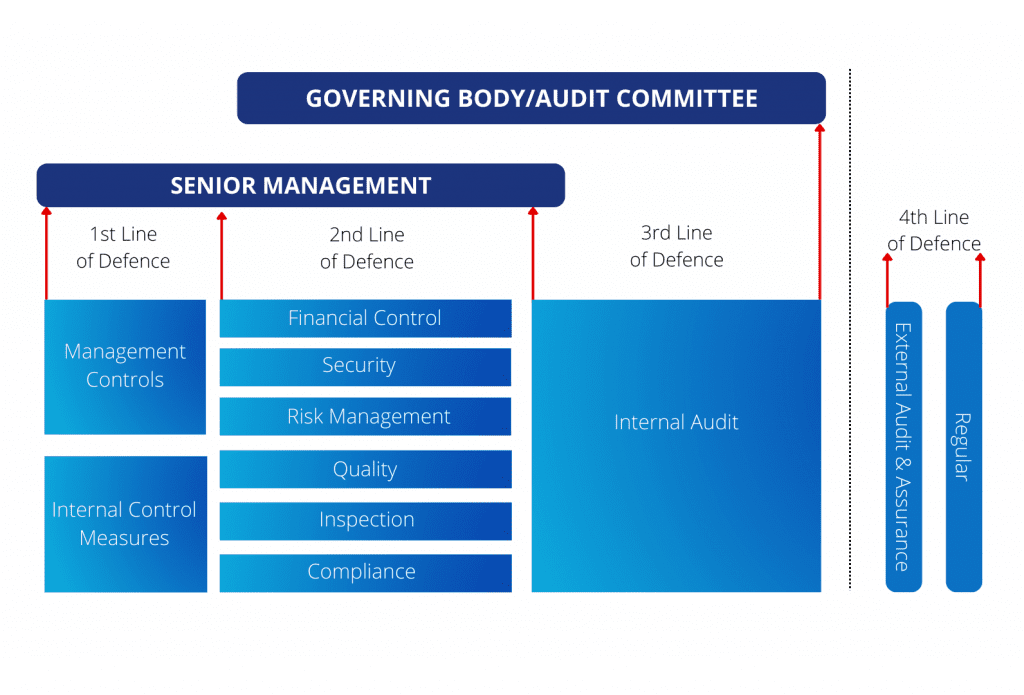
The Four Lines of Defence model is a valuable framework for assessing and enhancing an organisation’s risk management, control, and assurance processes. It helps organisations understand the different layers of protection and oversight. Let’s break down each line:
First Line of Defence: Control Frameworks and Day-to-Day Controls
The first line encompasses the organisation’s day-to-day operations and includes control frameworks, risk management systems, and controls over operational processes. These controls are implemented by staff directly involved in the business processes. Examples include transactional controls, quality checks, and approval processes.
Assurance at this level comes from the knowledge and commitment of staff operating the controls.
Benefits: Staff familiarity with business processes and the ability to identify weaknesses.
Weakness: Lack of independence due to self-review.
Second Line of Defence: Management Review
The second line involves independent review separate from day-to-day operations. It includes risk and compliance reviews, financial controls oversight, and board-level supervision. Reviewers are not directly responsible for the areas being reviewed, introducing a degree of independence.
Challenges: Reviewers still part of the same management team, limiting complete objectivity.
Third Line of Defence: Internal Audit
The third line consists of the internal audit function. Internal auditors provide independent assessments of controls, risk management, and compliance. They evaluate the effectiveness of controls and identify areas for improvement.
Benefits: Greater independence than the first two lines, specialized expertise.
Limitations: Still part of the organisation, potential conflicts of interest.
Fourth Line of Defence: External Assurance
The fourth line focuses on external assurances provided by external assessors, regulators, and other external bodies. These external parties assess an organisation’s controls, financial reporting, and compliance. Examples include external audits, regulatory inspections, and certifications.
Assurance at this level is critical for stakeholders’ confidence.
Benefits: Independence, specialised expertise, and credibility.
Challenges: Limited frequency (usually annual), reliance on external parties.
The Importance of External Assurance
The fourth line of defence plays a pivotal role in ensuring transparency, accountability, and trust. Let’s explore its components:
External Audits
Conducted by independent audit firms, external audits verify the accuracy of financial statements.
Auditors assess internal controls, identify risks, and provide an opinion on the fairness of financial reporting.
Stakeholders, including investors and creditors, rely on audit reports for decision-making.
Regulatory Inspections
Regulatory bodies (such as financial regulators, health authorities, or environmental agencies) perform inspections.
These inspections ensure compliance with laws, regulations, and industry standards.
Non-compliance can result in penalties or legal consequences.
Certifications and Standards
Organisations seek certifications (e.g., ISO, SOC, or industry-specific certifications) to demonstrate adherence to best practices.
These certifications are often externally validated.
Compliance with standards enhances an organisation’s reputation and competitiveness.
In summary, the fourth line of defence provides external validation—assuring stakeholders that an organisation’s controls and processes meet high standards. Organisations must actively engage with external assessors and regulators to maintain trust and credibility.
Our team at FEFO Consulting conduct diagnostic surveys that play a critical role in validating an organisation’s processes, controls, and compliance. We operate independently of the organisation, ensuring objectivity in our assessments that brings a fresh and valuable viewpoint.
Remember, while the first three lines of defence are essential, the fourth line adds an extra layer of confidence through external scrutiny.
To learn more about using external survey as a form of assurance, contact us.
In recent years, Australia has witnessed a significant increase in the demand for health and safety professionals. The ever-evolving regulatory landscape, heightened awareness of workplace safety, and a growing emphasis on employee wellbeing have all contributed to this surge in demand. Businesses across various industries are recognizing the need to invest in health and safety, not just as a legal requirement but as a crucial aspect of their corporate culture. As this demand continues to grow, businesses are exploring innovative solutions like Business Process Outsourcing (BPO) to meet their safety professional needs efficiently.
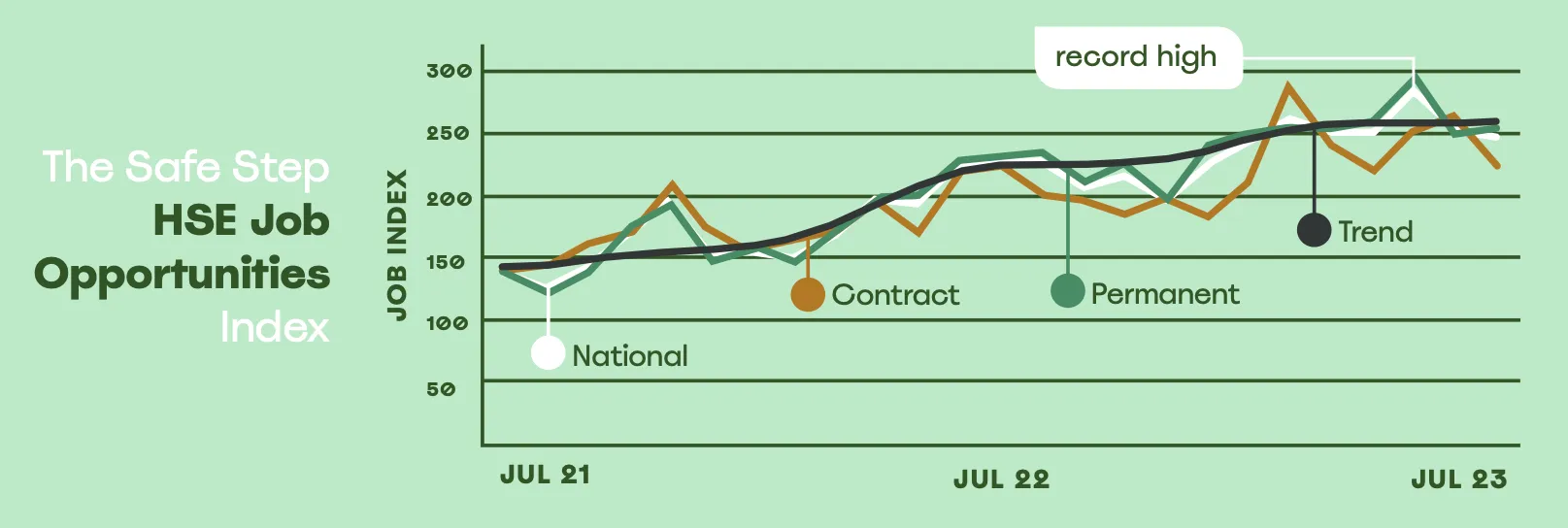
According to The Safe Step‘s HSE job market report, demand in HSE somewhat stabilised but still at a records high as of the second half of 2023. Demand for workplace health and safety professionals hit an all-time high in May and in July was 7.8% higher, year-on year.
To meet the growing demand for health and safety professionals, businesses may explore alternative solutions such as outsourcing health and safety services to industry known organisations such as FEFO Consulting who can provide expert advice on matters of health, safety, environment and wellbeing.
Let’s take a look on what might be the factors behind the increasing demand for BPO in Australia:
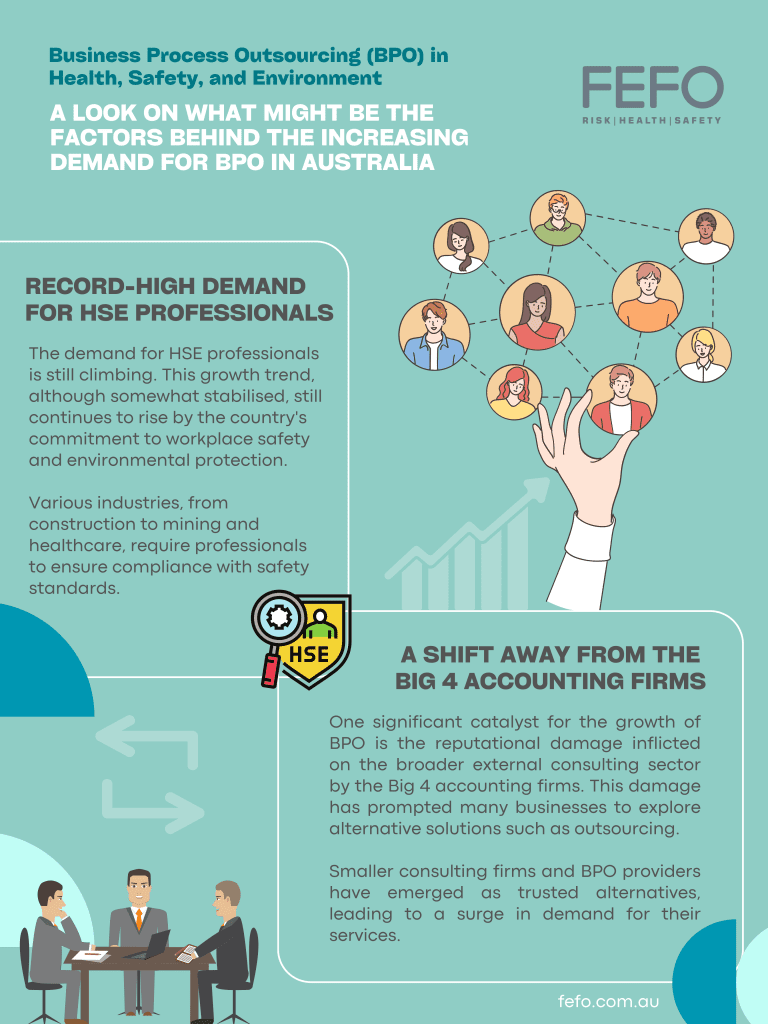
Record-high Demand for HSE professionals:The demand for HSE professionals is still climbing. This growth trend, although somewhat stabilised, still continues to rise by the country’s commitment to workplace safety and environmental protection. Various industries, from construction to mining and healthcare, require professionals to ensure compliance with safety standards.
A Shift Away from the Big 4 Accounting Firms: One significant catalyst for the growth of BPO is the reputational damage inflicted on the broader external consulting sector by the Big 4 accounting firms. This damage has prompted many businesses to explore alternative solutions such as outsourcing. Smaller consulting firms and BPO providers have emerged as trusted alternatives, leading to a surge in demand for their services.
Industry Leading Practices
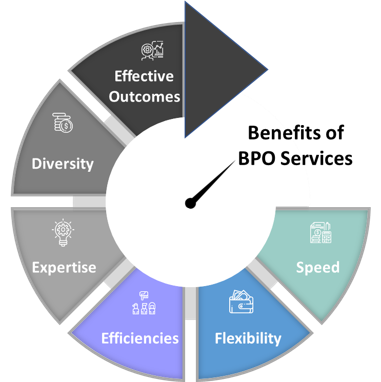
Within the safety industry, outsourcing risk, safety and wellbeing services is becoming an effective alternative for many organisations due to skill shortages, technology enabling access to external talent, and the increasing level of acceptance to work remotely “on demand”.
FEFO Consulting continues to partner with a diverse range of organisations across Australia and New Zealand to deliver exceptional health and safety solutions. Our BPO experience includes large scale retained services across a range of industries and disciplines, e.g. labour-hire, events & leisure, and heavy industrial equipment.
Assurance – Independent recurring assessments
Incident Response – “On call” and available to support incident response and critical incident investigations
Risk Assessments – Large volume, transactional work
Workshop & Training – Facilitation and training sessions.
Tips for Outsourcing
Here are a few tips when outsourcing health and safety activity:
Strategy – Be clear on your strategic choices to improve health & safety activity.
Segment Work – Group work into segments, e.g. strategy & innovation, core business, transaction processes, independent verifications.
Resourcing – Evaluate resourcing options based on capacity and capability now and in the future. Be clear on your selection criteria, e,g., share values, capacity and capability fit.
Measure Success –Be clear on how you will measure and know your resourcing choices are successful and celebrate success!
Resourcing with FEFO
Is your current risk, health and safety resource model effective? Could you benefit from outsourcing Health and Safety?
FEFO Consulting is proud to deliver innovative solutions and effective outcomes.
Contact us to discuss your needs and how we may be able to help.
Don’t miss out on our Newsletters!
Sign up for industry leading news, case studies and informative videos…
Partner Spotlight
Return to Work Consulting
FEFO Consulting recently joined forces with one of our strategic partners to help a client. With a tight labour market, finding the personnel with the experience and capacity can be tough. Our Partnership provided agile specialists at speed to fill a client need.
As an outcome, we streamlined processes, initiated greater levels of early intervention, enabled recovery at work, improved RTW outcomes and a reduction in costs.
About Return to Work Consulting
Through strategic management of workplace injuries, Return to Work Consulting aims to mitigate rising insurance premiums for businesses. They provide businesses with a Return to Work Coordinator ready to respond to a workplace injury and who will also review your WorkSafe compliance requirements.
Services include workers compensation claims management, ergonomic assessments and premium analysis.
World Congress
FEFO Abstract Selection
Exciting news! Recently, the team here at FEFO Consulting submitted an abstract to the World Congress on Safety and Health at work and were lucky enough to be chosen as a finalist out of over 1,100 submissions!
Our team will be presenting at the 23rd World Congress on ‘Measuring Health & Safety Performance’ from an international perspective.
In collaboration with several of Partners from UK, Europe, New Zealand, Asia, Canada, and South America, we have provided a unique insight into universally relevant health and safety measurement techniques.
A big thank you to everyone on our team of partners who contributed to our submission. Rebecca Crompton, Director, FEFO Consulting, Australia Or Hever, CEO – Move4Life Corporate Wellness Provider, Poland Ian Gordan, Director, Gordon Foley Consulting, Scotland Maria Kolarova – Titopoulou, PHD, Managing Director, LOT-CONSULT EOOD, Bulgaria Cam Mitchell, President, Kasa Consulting, Canada Sriram Prasath, EHS Project Manager, Singapore Rafael Santos, EHS Manager, L’Oréal, Brazil.
Education Piece
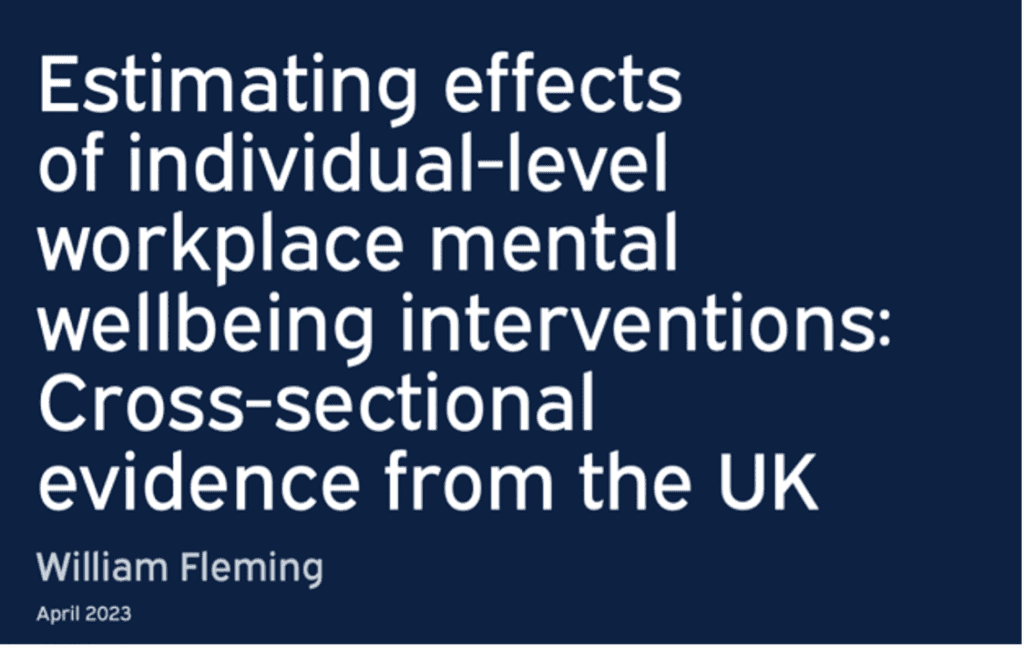
Recent studies conducted by the University of Oxford suggest that wellbeing interventions that seek organisational change and engage with working conditions are more successful than individual wellness initiatives in the work environment. This research is consistent with our Health and Safety Index benchmark results.
Based on our 2022 benchmark data analysis, we recommend four core areas to improve Health & Wellbeing in the workplace.
Job Control
Change Management
Supportive Enviro
Values & Beliefs
For more information on our Health and Safety Index diagnostic (Dx) surveys, health and safety climate benchmark results, and methods to identify workplace psychosocial factors, click here.
To learn more about this recent study, access the scientific paper here:
Dates for the Diary
Here are a few exciting dates for the diary in 2023! May